
If you’re stuck between two hosts that look similar on paper, choosing the wrong one can mean paying more, dealing with slower performance, or migrating your site later. Hostinger vs ScalaHosting comes down to more than just the cheapest introductory price.
In a nutshell: Hostinger is the better choice for most beginners, bloggers, and small businesses looking for affordable, easy-to-use hosting, while ScalaHosting becomes more compelling if you need managed VPS hosting and greater room to scale.
Hostinger is also the more widely used provider by a significant margin. W3Techs currently reports Hostinger on 5.1% of all websites, while ScalaHosting is used by less than 0.1%. Hostinger also reported 4.6 million customers across 150+ countries in its 2025 results.
But popularity doesn’t automatically make one host better. I’ve looked at both from the perspective of what actually matters when choosing hosting pricing, performance, WordPress features, security, support, ease of use, and scalability. And there are a few areas where ScalaHosting can make more sense than Hostinger.
So, which hosting provider should you actually buy in 2027? Let’s compare Hostinger and ScalaHosting feature by feature and see which one offers the better value for your website.
Hostinger vs ScalaHosting: Quick Comparison
Hostinger and ScalaHosting take slightly different approaches to web hosting. Hostinger focuses on affordable, beginner-friendly hosting with an easy-to-use platform, while ScalaHosting puts more emphasis on managed hosting, security, and scalability.
So, when comparing both, the better choice depends on what you need from your hosting account, not simply which provider has the lower promotional price.
| Feature | Hostinger | ScalaHosting |
| Starting price* | From ₹69/mo | From $2.95/mo |
| Hosting types | Shared, Cloud, VPS | Shared, Managed VPS, Cloud |
| Storage | 20–100 GB+ | 50 GB+ NVMe |
| Performance | NVMe, CDN, optimized infrastructure | NVMe, CDN, cloud infrastructure |
| Free domain | Yes, on eligible plans | Yes, on eligible plans |
| Backups | Weekly or daily, depending on plan | Automatic offsite backups |
| Security | SSL, DDoS protection, firewall, malware scanning | SSL, SShield security, firewall |
| Support | 24/7 support | 24/7 support |
| Money-back guarantee | 30 days | 30 days; prorated refunds may also apply |
| Links | Hostinger.com | Scalahosting.com |
*Promotional pricing and plan terms can change. Check the provider’s current pricing before purchasing.
Quick Verdict:
Choose Hostinger if you want affordable, straightforward hosting for a blog, portfolio, or small business website. Choose ScalaHosting if you need stronger managed hosting capabilities, more scalable resources, or are considering VPS hosting.
Want to know why we picked this winner?
Read the full comparison to see how Hostinger and ScalaHosting compare on pricing, performance, WordPress, features, and support.
Continue reading to find the right hosting for your website.
Hostinger and ScalaHosting: Key Differences
The biggest difference is what each provider is built around. Hostinger keeps things simple and affordable for everyday website owners, while ScalaHosting puts more emphasis on managed hosting, dedicated resources, and scalability.
Hosting Plans and Resources
Hostinger offers shared, cloud, and VPS hosting, with resources varying by plan. Its current plans include SSD/NVMe storage, CDN, backups, and WordPress tools.
ScalaHosting offers shared hosting plus managed cloud/VPS options. Its managed VPS plans provide guaranteed CPU, RAM, storage, and network resources, making them better suited to growing websites.
Control Panel and Ease of Use
Hostinger uses its custom hPanel, which keeps website, domain, email, WordPress, and hosting settings together in one interface.
ScalaHosting offers SPanel with its managed VPS plans, while cPanel is also available. SPanel includes website, database, email, SSL, backup, and WordPress management tools.
Performance and Server Technology
Hostinger uses NVMe storage, LiteSpeed servers, CDN, and caching features to improve loading speeds. ScalaHosting’s managed VPS approach provides dedicated resources and stronger isolation, which can be valuable when traffic and resource requirements increase.
Security and Backups
Both providers take security seriously. Hostinger includes SSL, DDoS protection, malware scanning, and backups depending on the plan. ScalaHosting adds features such as SShield security and remote daily backups on managed VPS plans.
WordPress Features
Hostinger is particularly beginner-friendly, with one-click WordPress installation, automated updates, LiteSpeed, Object Cache, and WordPress management tools. ScalaHosting also provides WordPress management through SPanel.
VPS and Scalability
This is where ScalaHosting has a stronger edge. Its managed VPS plans provide guaranteed resources and management, while Hostinger’s VPS plans offer scalable CPU, RAM, storage, and bandwidth options.
For a broader look at Hostinger's strengths and weaknesses, see our Hostinger review.
Hostinger and ScalaHosting Pricing
Price is one of the biggest reasons people compare these two hosts, but the advertised starting price doesn’t tell the whole story. Hostinger vs ScalaHosting is more useful when you look at the initial term, renewal rate, and resources you actually receive.
Hostinger Pricing
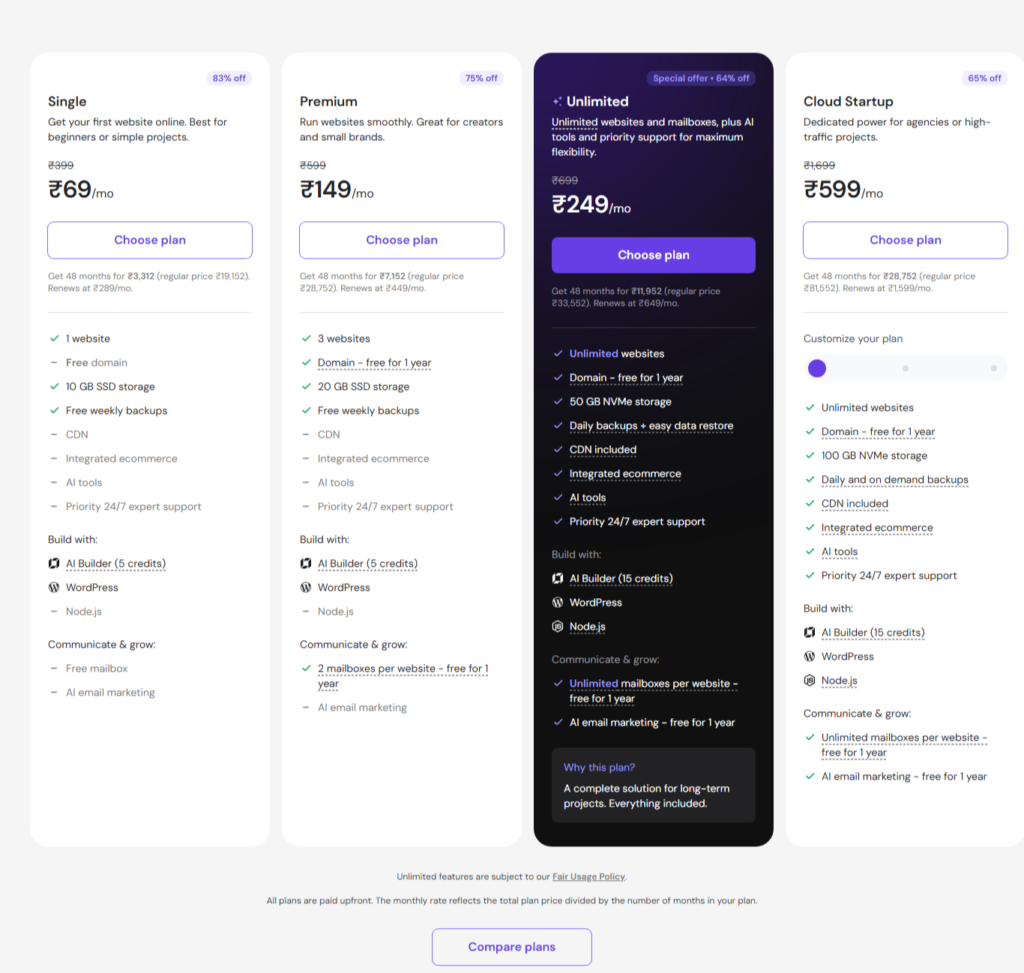
Hostinger’s shared hosting is positioned as the budget-friendly option. Its current Premium plan is advertised at $2.99/month with a 48-month term, while the regular renewal price is $10.99/month.
ScalaHosting Pricing
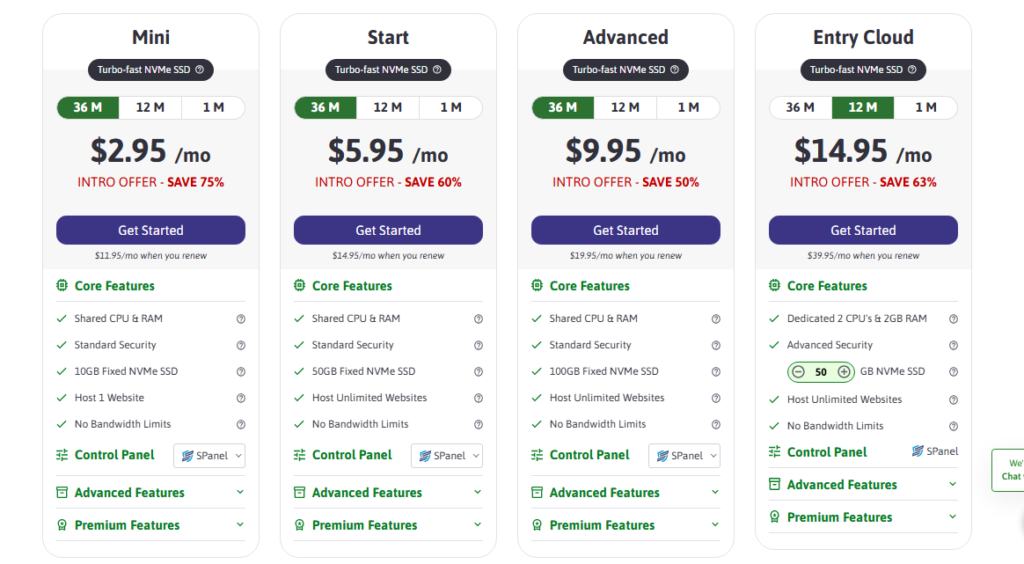
ScalaHosting generally costs more upfront, particularly when you move into managed VPS hosting. However, you’re paying for additional resources and management rather than simply more storage. This makes it more attractive for websites that expect to grow.
Renewal Prices and Long-Term Value
This is where you need to look beyond the promotional price. Hostinger clearly displays renewal pricing in your account before renewal.
ScalaHosting’s higher starting cost can make sense if you need managed VPS resources, but it may be unnecessary for a simple blog or small business site.
For a detailed breakdown of Hostinger’s strengths, weaknesses, and real-world value, check our Hostinger hosting review.
Bottom line: Hostinger wins for budget-conscious beginners, while ScalaHosting offers better value when you specifically need managed, scalable hosting.
Hostinger vs ScalaHosting: Performance
Performance matters whether you’re running a blog, business website, or online store. Both providers use modern infrastructure, so the difference comes down more to how much performance and scalability you need.
Speed and Page Load Times
Hostinger uses NVMe storage, LiteSpeed, CDN, caching, and optimized PHP workers on its higher-tier hosting, giving WordPress and business websites a solid speed foundation.
ScalaHosting also uses NVMe storage, high-frequency CPUs, CDN integration, and LiteSpeed/OpenLiteSpeed options. Its managed VPS plans add dedicated resources, which can help maintain consistent performance as traffic grows.
Check Scalahosting website server speed here.
Server Locations and Infrastructure
Hostinger has data centers across North America, Europe, Asia, and South America, allowing you to choose a location closer to your visitors.
ScalaHosting uses cloud infrastructure across multiple data centers, with built-in redundancy designed to reduce the impact of individual server failures.
Uptime and Reliability
Hostinger offers a 99.9% uptime guarantee, while ScalaHosting also advertises a 99.9% uptime guarantee for its cloud hosting.
For most blogs and small business sites, Hostinger offers more than enough performance. However, for higher-traffic websites or resource-heavy projects, ScalaHosting’s managed cloud/VPS infrastructure gives it an advantage.
Hostinger and ScalaHosting for WordPress
If WordPress is your priority, both hosts offer plenty of useful tools, but they target slightly different users. Hostinger vs ScalaHosting is mainly a choice between simplicity and more advanced managed hosting features.
WordPress Setup and Management
Hostinger makes getting started easy with one-click WordPress installation, automatic updates, migration tools, and a beginner-friendly dashboard. Its managed WordPress plans also include WP-CLI and other management features.
ScalaHosting also offers one-click installation, free migration, automatic updates, WP-CLI, SSH, and tools for managing multiple WordPress sites.
WordPress Performance Features
Hostinger uses LiteSpeed, caching, and WordPress optimization tools to improve website performance. Its higher plans also include Object Cache and CDN features.
ScalaHosting offers OpenLiteSpeed caching, CDN integration, and scalable cloud resources, making it particularly attractive for websites expecting heavier workloads.
Backups, Security, and Staging
Both providers offer backups and security features, while staging lets you test changes before pushing them live. Hostinger’s staging tool is available on Business WordPress plans and above.
ScalaHosting includes one-click staging, cloning, automatic backups, and real-time malware protection on its WordPress cloud hosting.
Verdict: Which Is Better for WordPress?
Hostinger wins for most beginners and bloggers because it’s easier to use and generally more budget-friendly. Check Hostinger WordPress tutorials here.
ScalaHosting is the stronger choice for growing or resource-intensive WordPress sites that need managed cloud resources and advanced management tools. Check Scalahosting WordPress guide here.
Hostinger and ScalaHosting: Features
Features are where the two hosts start to feel quite different. Hostinger focuses on giving everyday users plenty of useful tools without making hosting complicated, while ScalaHosting puts more emphasis on flexibility, management, and advanced hosting capabilities.
What’s Included With Hostinger
Hostinger’s plans include free SSL, backups, CDN, email, WordPress tools, AI features, and website-building options. Higher plans add NVMe storage, daily backups, Object Cache, and more resources.
It is a particularly convenient package for bloggers, small businesses, and creators who want most essentials available from one dashboard.
What’s Included With ScalaHosting
ScalaHosting includes features such as NVMe storage, automated backups, free website migration, email migration, unlimited databases, and expert technical support. Its hosting also focuses heavily on managed services and security.
This makes ScalaHosting more interesting if you need greater control or expect your website to become more resource-intensive. Read indepth features of scalahosting on G2 https://www.g2.com/products/scalahosting/features.
Which Host Offers Better Value?
In Hostinger vs ScalaHosting, there isn’t one universal winner. Hostinger offers better overall value for beginners because you get a broad collection of features at a relatively low entry price.
ScalaHosting offers better value when you specifically need managed hosting, stronger resources, or room to scale.
For most new websites, Hostinger is the more practical choice. For growing or technically demanding projects, ScalaHosting deserves a closer look.
Hostinger and ScalaHosting: Security
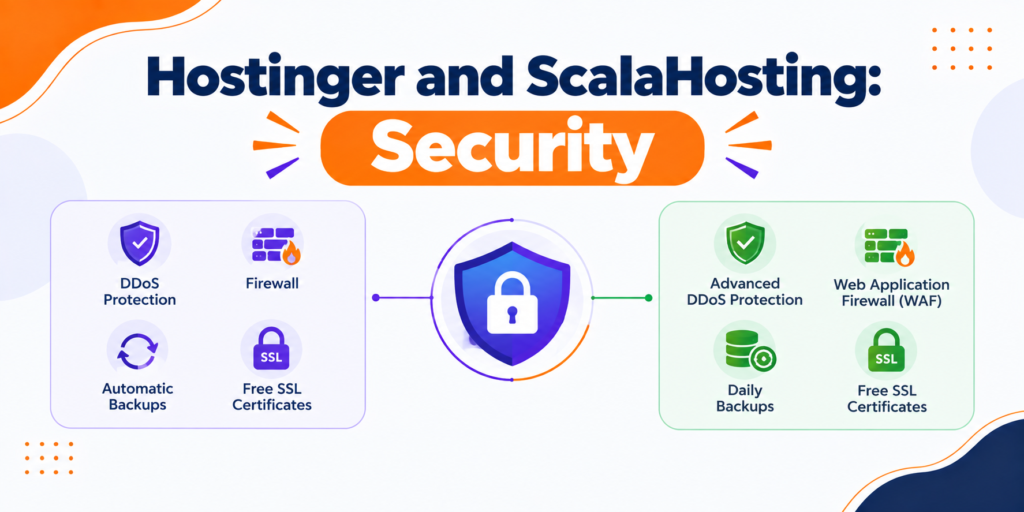
Security is an area where both providers cover the essentials, but they take slightly different approaches.
Hostinger vs ScalaHosting becomes more interesting here because ScalaHosting puts extra emphasis on proactive monitoring, while Hostinger offers a strong set of built-in protections for everyday websites.
SSL, Malware Protection, and DDoS Protection
Hostinger includes free SSL certificates, firewall protection, malware scanning, and DDoS protection. It also uses security modules and continuous vulnerability scanning to protect its infrastructure.
ScalaHosting includes free SSL and its proprietary SShield security system on shared and managed cloud VPS plans. SShield continuously monitors websites for suspicious activity and provides real-time malware detection.
Backups and Account Security
Hostinger provides automated backups, although the frequency depends on the hosting plan. Weekly backups are available across web and cloud hosting, while Business and higher plans include daily backups.
ScalaHosting offers automated backups with remote storage, giving you additional protection if something goes wrong with your website or server.
Which Is More Secure?
For most blogs and small business websites, Hostinger provides more than enough security. However, ScalaHosting gets the edge if proactive monitoring and security-focused management are priorities. Its SShield system and remote backups make it particularly appealing for websites where security and recovery are critical.
You can also see the provider’s official security details on Hostinger’s security guide and ScalaHosting’s SShield documentation.
Hostinger vs ScalaHosting: Customer Support
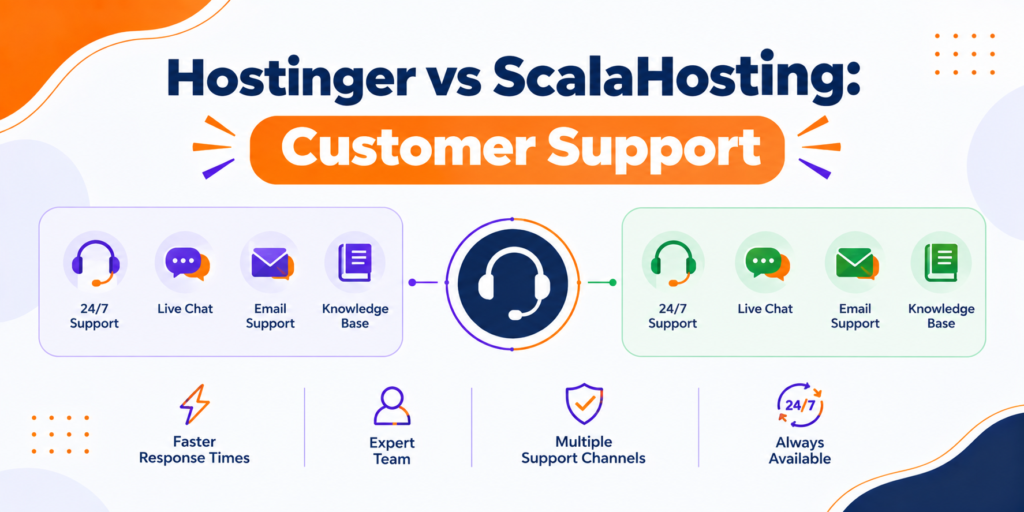
Good support matters when something breaks, especially if you’re not comfortable troubleshooting hosting issues yourself. In Hostinger vs ScalaHosting, both offer 24/7 assistance, but the support experience is slightly different.
Support Channels and Availability
Hostinger provides 24/7 support through live chat, with its AI-powered Hostinger Agent handling common questions before transferring you to a human specialist when needed. It also offers a large knowledge base, tutorials, and Hostinger Academy. Phone support isn’t available.
ScalaHosting offers 24/7 technical support through live chat, email, and tickets. This gives users more ways to reach an actual support team, particularly when dealing with technical hosting issues.
Response Time and Support Quality
Hostinger’s AI-first approach can make simple questions and routine troubleshooting faster, while human specialists are available when needed. Its support resources are also particularly helpful for beginners.
ScalaHosting claims an average 15-second live-chat connection and an average first response of around 15 minutes for tickets.
These are company-reported figures, so they shouldn’t be treated as independently verified benchmarks.
Which Has Better Support?
For beginners who prefer guided, easy-to-follow assistance, Hostinger is a strong choice.
However, ScalaHosting gets the edge for technical support, thanks to its combination of live chat, email, tickets, and managed hosting assistance.
If hands-on technical support is your priority, ScalaHosting is the better option.
Hostinger and ScalaHosting: Ease of Use
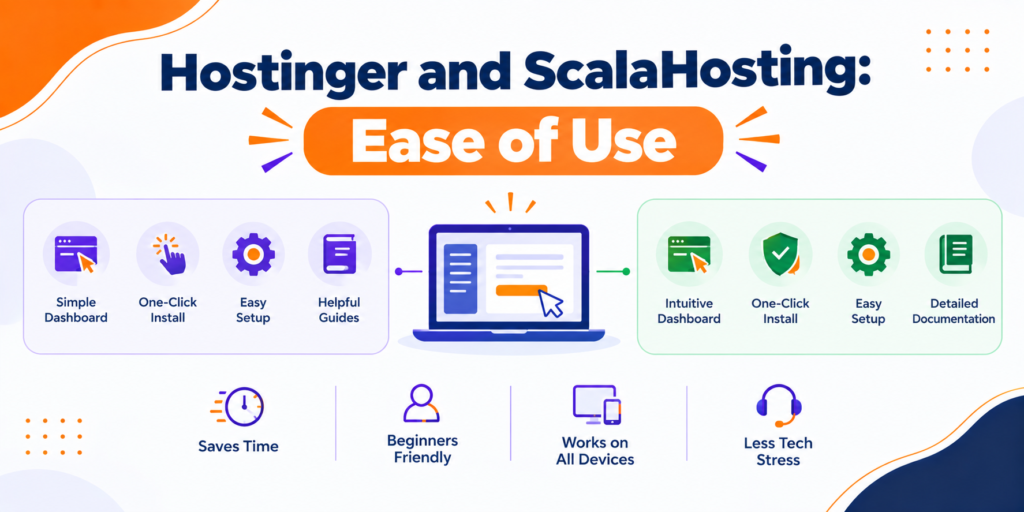
Both providers aim to make hosting manageable without requiring advanced technical knowledge, but their interfaces feel different. Hostinger vs ScalaHosting comes down to simplicity on one side and greater control on the other.
Dashboard and Control Panel
Hostinger uses hPanel, its custom control panel designed to keep domains, websites, email, databases, WordPress, and other settings in one place. The interface is clean and beginner-friendly, making common tasks easy to find.
ScalaHosting uses SPanel for its managed VPS environment. It provides more advanced server and website management options, but the larger feature set can feel slightly more technical if you’re completely new to hosting.
Website Migration and Setup
Hostinger offers assisted website migration through hPanel, including a guided process for eligible WordPress and other websites.
ScalaHosting goes a step further by offering free migration assistance, with its support team handling website files, databases, and emails for eligible migrations.
Which Is Better for Beginners?
Hostinger wins for beginners. Its straightforward hPanel, simple setup process, and guided tools make it easier to launch and manage a website without much technical knowledge.
ScalaHosting is still user-friendly, but its stronger focus on managed VPS hosting makes it more appealing to users who want additional control and flexibility as their website grows.
User Reviews and Ratings
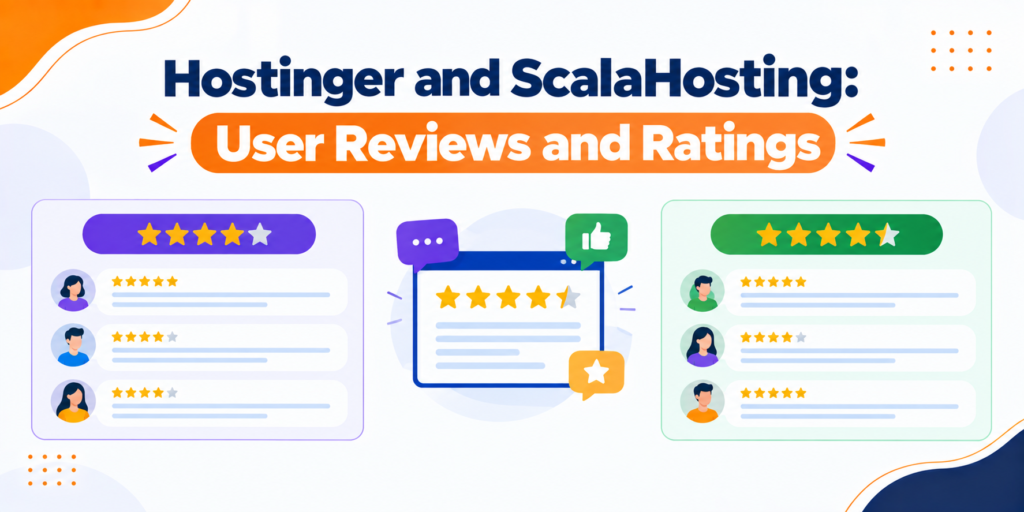
User reviews are useful when comparing hosting providers because they show what customers actually experience after signing up. While ratings should not be the only deciding factor, they can give you a good idea of customer satisfaction, support quality, and overall reliability.
Trustpilot Reviews
On Trustpilot, both providers have strong ratings, but ScalaHosting currently has the higher score. ScalaHosting has a 4.9/5 rating from around 2,200 reviews, with 99% of reviews being 5-star. Check the rating of ScalaHosting on Trustpilot.
Hostinger also has a strong Trustpilot reputation, with a 4.6/5 rating and tens of thousands of reviews. Its large review volume gives a broader picture of experiences across its much larger customer base. Check the rating of Hostinger on Trustpilot.
G2 Reviews
G2 provides another useful comparison. ScalaHosting currently has a 4.8/5 rating from 552 reviews, with users particularly praising its support, ease of use, and hosting performance.
Hostinger also performs well on G2. Recent G2 data highlights its ease of use, administration, affordability, and customer support as some of its strongest areas. Check G2 Hosting Reviews
What Do Users Say?
The overall feedback gives ScalaHosting an advantage when it comes to support and managed hosting, while Hostinger receives strong praise for simplicity, affordability, and beginner-friendly management.
So, when looking at both: User Reviews and Ratings, ScalaHosting comes out ahead on average ratings, while Hostinger has the advantage of a much larger customer and review base.
Keep in mind that ratings can change over time, and individual experiences vary. It’s better to consider reviews alongside pricing, features, performance, and support before making your final hosting decision.
Hostinger vs ScalaHosting: Pros and Cons
By this point, the differences should be fairly clear. Rather than repeating every feature, here’s a quick look at where each provider shines and where you might run into limitations.
Hostinger Pros and Cons
ScalaHosting Pros and Cons
The Bottom Line
When comparing both, Hostinger is the easier pick for beginners and budget-conscious website owners. ScalaHosting makes more sense when you need managed hosting, stronger resources, or room to scale.
Overall, Hostinger wins for simplicity and value, while ScalaHosting wins for advanced hosting needs.
Hostinger vs ScalaHosting: Which Is Better?
There isn’t one winner for everyone. The right choice depends on whether you value simplicity and affordability or managed hosting and scalability. Here’s the easiest way to decide.
Choose Hostinger If…
You want affordable hosting: Hostinger is the better fit if keeping your hosting costs low is important. Its plans bundle essentials such as SSL, backups, CDN, email, and WordPress tools.
You’re a beginner: The intuitive hPanel and guided setup make it easy to launch and manage a website without much technical knowledge.
You need an easy WordPress setup: WordPress installation, migration, automatic updates, and built-in performance tools make Hostinger particularly convenient for bloggers and small businesses.
You prioritize value: You get a broad set of features without immediately paying for managed VPS-level resources.
Choose ScalaHosting If…
You need more advanced hosting options: ScalaHosting makes more sense when your website has outgrown basic shared hosting.
You want managed VPS hosting: If you’d rather have server management handled for you while getting dedicated resources, ScalaHosting is the stronger choice.
You need greater scalability: Growing websites can benefit from more powerful cloud/VPS infrastructure instead of repeatedly upgrading basic hosting.
You value SPanel and managed features: SPanel and ScalaHosting’s managed environment are particularly useful for users who want more control without managing every server task themselves.
Bottom line: For most beginners, bloggers, and small businesses, Hostinger is the easier choice. For resource-heavy or rapidly growing websites, ScalaHosting is worth considering.
Final Verdict – Hostinger vs ScalaHosting
After comparing pricing, performance, WordPress features, security, support, and ease of use, Hostinger is the overall winner for most users. It offers the better balance of affordability, beginner-friendly tools, solid performance, and useful features without making hosting unnecessarily complicated.
Best for beginners: Hostinger, its simple hPanel and straightforward WordPress setup make it easier to get started.
Best for WordPress: Hostinger, especially for bloggers and small business websites that want easy management, caching, backups, and WordPress-focused tools.
Best for budget-conscious users: Hostinger,its lower starting cost and strong feature set give you more value for your money.
Best for growing websites/VPS: ScalaHosting – its managed VPS options, dedicated resources, and scalability make more sense when your website needs greater control and room to grow.
The biggest weakness of Hostinger is that renewal prices are higher than the introductory rates, while some advanced features require higher-tier plans. ScalaHosting’s main drawback is its higher overall cost and more technical approach, which can be unnecessary for simple websites.
Final Rating
Hostinger: 4.8/5 ⭐
ScalaHosting: 4.4/5 ⭐
If you want affordable, reliable, and easy-to-manage hosting, Hostinger is worth the money and the better choice for most websites. ScalaHosting is still a strong option if managed VPS hosting is your priority.
Ready to choose Hostinger?
Frequently Asked Questions
Is Hostinger better than ScalaHosting?
Yes, for most beginners, bloggers, and small businesses. Hostinger offers easier management, affordable plans, strong WordPress features, and good overall value.
Is ScalaHosting better than Hostinger?
ScalaHosting can be better for users who need managed VPS hosting, dedicated resources, and greater scalability. For simple websites, Hostinger is usually the better choice.
Which is cheaper, Hostinger or ScalaHosting?
Hostinger is generally cheaper, especially for shared hosting. ScalaHosting costs more but offers stronger managed hosting and VPS options.
Which is better for WordPress, Hostinger or ScalaHosting?
Hostinger is better for most WordPress users because of its beginner-friendly dashboard, WordPress tools, caching, backups, and affordable plans.
Is ScalaHosting good for beginners?
Yes, but it may feel more technical than Hostinger. Beginners who want simple website management will generally find Hostinger easier.
Is ScalaHosting good for VPS hosting?
Yes. ScalaHosting is particularly strong for managed VPS hosting, offering dedicated resources, scalability, security, backups, and managed services.
Which has better performance, Hostinger or ScalaHosting?
Both offer strong performance features such as NVMe storage, caching, and CDN options. Hostinger is sufficient for most websites, while ScalaHosting is better suited to resource-heavy or growing websites.
Can I migrate my website from Hostinger to ScalaHosting?
Yes. ScalaHosting offers free website migration assistance, including help with files, databases, and emails, making it possible to move your website from Hostinger with minimal hassle.